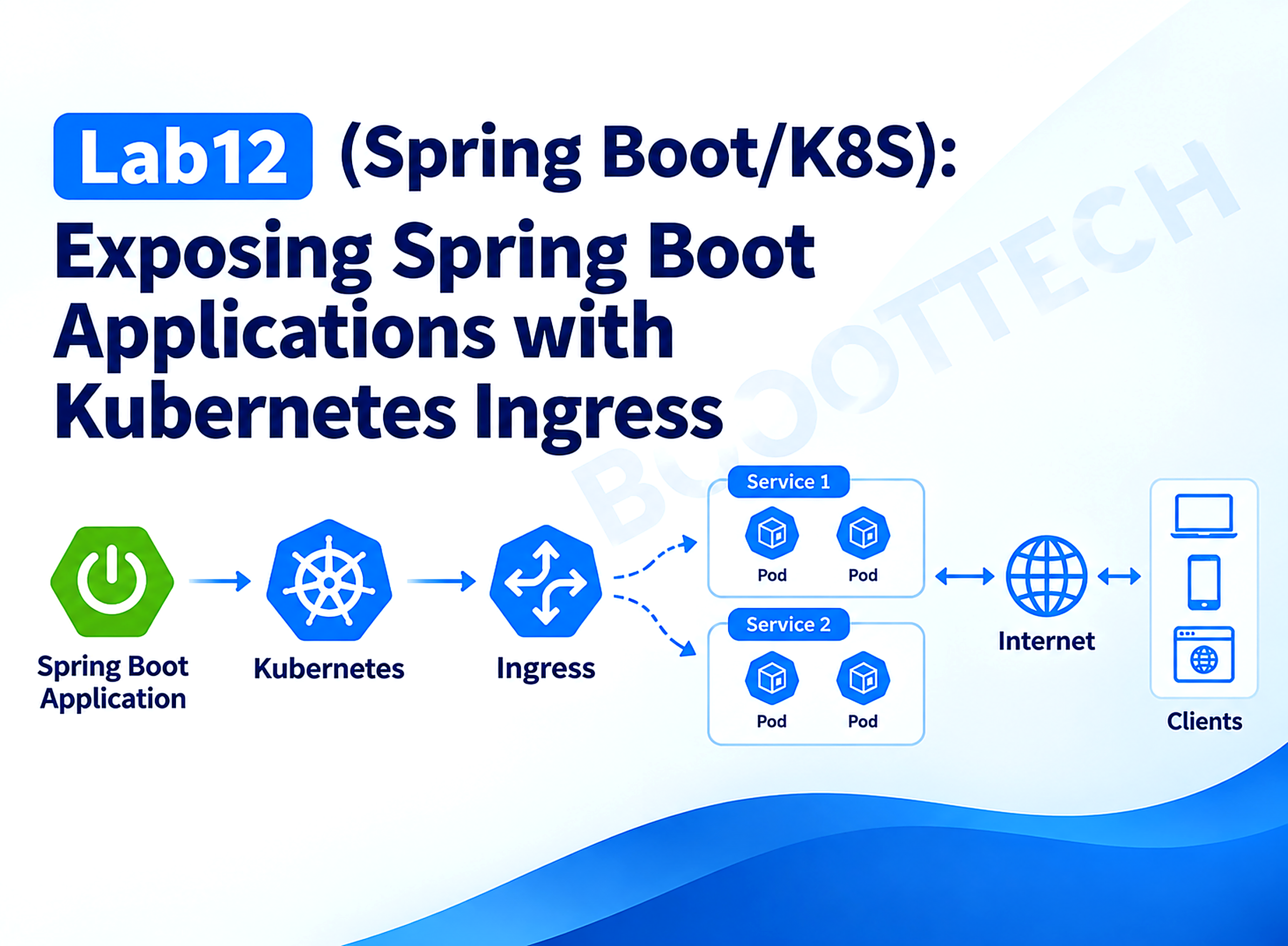
In Lab12 of my Spring Boot/K8S series, I replace Lab10’s NodePort-exposed Angular frontend with a real Ingress setup: one host, three backends (frontend, a Spring
Tag: Spring Boot
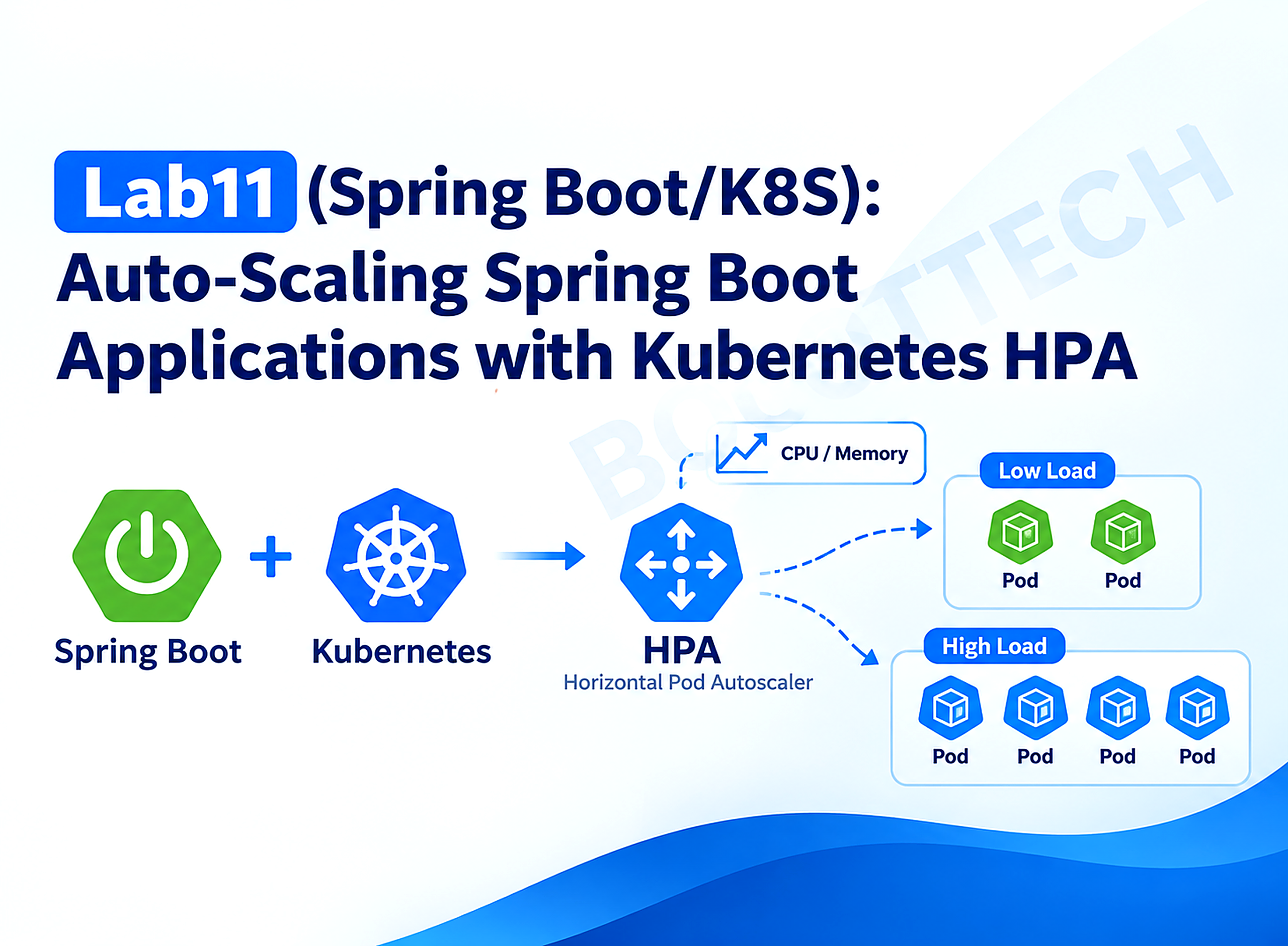
In this post, I’ll build a production-oriented HPA for a CPU-bound Spring Boot 3.3 service, configure autoscaling/v2, set up metrics-server, and test scale-out and scale-in

In this post, we’ll explore a complete implementation of the Spring authorization server using PostgreSQL for data persistence. Prerequisites Overview Every team eventually builds their

60-Day Kafka 4 Learning Plan · Week 9 — Capstone & Career Stack: Spring Boot 3 · Kafka 4 KRaft · STOMP WebSocket · STOMP · Flutter

60-Day Kafka 4 Learning Plan · Week 5 — Kafka Streams (capstone)Sources: Kafka: The Definitive Guide Ch.11 · kafka.apache.org/documentation/streams/tutorial Goal Combine all Week 5 concepts into one

60-Day Kafka 4 Learning Plan · Week 4 Lab — Schema & Serialization Sources: Kafka: The Definitive Guide Ch.3 & 9 · avro.apache.org · docs.confluent.io/schema-registry Goal Execute

60-Day Kafka 4 Learning Plan · Week 3 — Spring Boot Integration (Lab) Sources: Kafka: The Definitive Guide Ch.3, 4 & 9 · docs.spring.io/spring-kafka Goal Assemble everything

60-Day Kafka 4 Learning Plan · Week 3 — Spring Boot Integration (Lab) Sources: Kafka: The Definitive Guide Ch.3 & 4 · docs.spring.io/spring-kafka Goal Wire two Spring

60-Day Kafka 4 Learning Plan · Week 3 — Spring Boot Integration Sources: Kafka: The Definitive Guide Ch.5 · docs.spring.io/spring-kafka/reference Goal Build a production-grade error handling pipeline

60-Day Kafka 4 Learning Plan · Week 3 — Spring Boot Integration Sources: Kafka: The Definitive Guide Ch.4 · docs.spring.io/spring-kafka/reference Goal Configure Spring Kafka consumer concurrency for